

Getting Started with Pitching: Accuracy and Speed Foundations
Want to throw harder and hit your spots more consistently? It boils down to a combination of proper mechanics, physical conditioning, and mental focus. There’s no magic bullet, but by understanding the fundamentals and dedicating yourself to practice, you can definitely see significant improvements in both accuracy and speed. We’ll break down the key elements, from your grip to your follow-through, and discuss how to refine each one.
Understanding the Importance of Each Element
It’s tempting to focus solely on throwing as hard as possible, but accuracy is just as crucial, if not more so, especially as you face more skilled hitters. A wild fastball is often less effective than a well-placed changeup. Conversely, throwing slow but accurate pitches won’t always cut it at higher levels. The sweet spot lies in developing both simultaneously. Ignoring one in favor of the other will ultimately limit your potential on the mound. Think of it as a delicate dance; each step influences the next.
For those looking to enhance their baseball pitching skills, understanding the fundamentals of accuracy and speed is crucial. A related article that delves into the latest highlights and developments in sports, including baseball, can be found here: Asia and Global Sports: Key Highlights from the Last 24 Hours. This resource provides valuable insights that can complement your training regimen and keep you updated on the sport’s evolving landscape.
The Grip: Your Foundation for Control and Movement
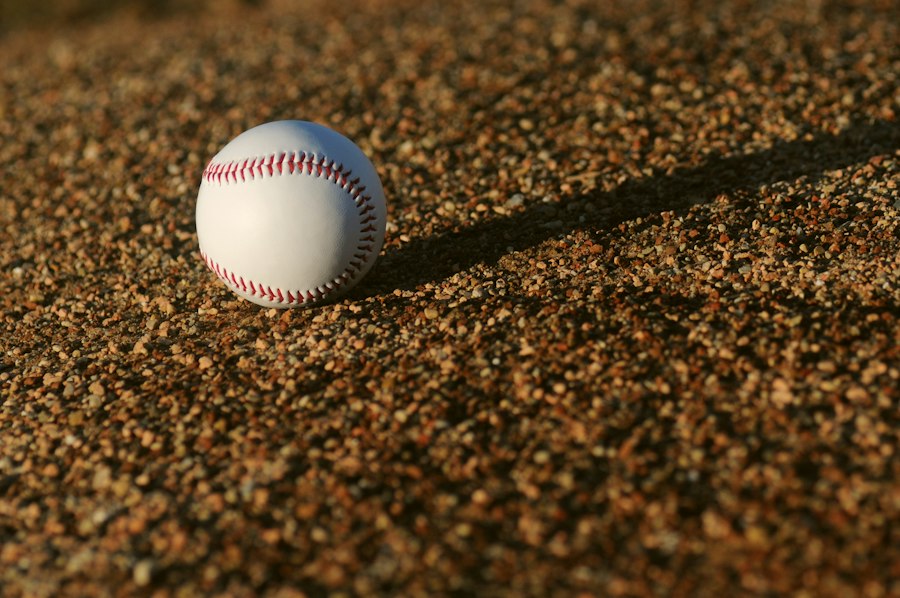
Before you even think about winding up, how you hold the baseball is paramount. Your grip dictates everything from the spin on the ball to the comfort of your release. Different grips are used for different pitches, but even for a basic fastball, slight variations can have a big impact.
Four-Seam Fastball Grip
This is your most common and often fastest pitch. You want to place your index and middle fingers across the “horseshoe” seams, where the seams are closest together. Your thumb should be directly underneath the ball, positioned to provide support and leverage. The key here is to have a loose, relaxed grip, almost like you’re holding a bird – firm enough not to drop it, but not so tight you’d crush it. This grip allows for maximum backspin, which helps the ball resist gravity and appear to “ride” through the strike zone. The amount of pressure applied by your fingers can slightly alter the pitch. Some pitchers prefer a slightly wider finger spread for more velocity, while others bring them closer for better control. Experiment to find what feels most natural and effective for you.
Two-Seam Fastball Grip
For a two-seam fastball, you’ll place your index and middle fingers along two parallel seams. Your thumb again provides support underneath. The goal with this grip is to create a slight side-to-side movement, or “run,” as it approaches the plate. This is achieved by the way the seams interact with the air as the ball rotates. Many pitchers find this grip slightly easier to control than the four-seam, even if it sacrifices a tiny bit of velocity. The subtle movement can be incredibly effective at jamming right-handed hitters (for a right-handed pitcher) or inducing weak contact. Just like with the four-seam, a relaxed grip is essential.
Changeup Grip
The changeup is all about deception – making the hitter think it’s a fastball until it’s too late. The most common changeup grip is the “circle change.” You form a circle with your thumb and index finger, placing the ball against your palm with your middle, ring, and pinky fingers spread across the seams. This grip essentially takes velocity off the pitch by reducing the amount of force you can apply with your fingertips, while still maintaining the arm speed of a fastball. This difference in velocity, coupled with a similar arm motion, is what makes the changeup so effective. The goal is to throw it with the same arm speed as your fastball, but have it come out significantly slower. Another popular changeup is the “palm ball,” where the ball is held deeper in the palm, almost completely obscuring the seams, further reducing velocity and spin.
Curveball Grip
The curveball is designed to break downwards and away from the hitter. The grip typically involves placing your middle finger along a seam, with your index finger either beside it or slightly curled. Your thumb is tucked underneath for support. The key to a good curveball is imparting maximum topspin. This is achieved by “snapping” your wrist down and through the ball at release, almost as if you’re pulling down on a string attached to the top of the ball. The amount of finger pressure and the precise angle of your wrist snap will influence the sharpness and direction of the break. This pitch requires a good deal of feel and practice to master.
Slider Grip
A slider is often described as a “faster curveball” or a “harder curve.” It typically breaks horizontally, with a sharp, late bite. The grip is similar to a curveball but often involves slightly more pressure with the index finger. You’ll typically place your index finger on a seam, with your middle finger beside it, and your thumb underneath. The release for a slider involves a “cutting” action, where you apply pressure to the side of the ball as you pronate your forearm and wrist, almost like you’re trying to cut the ball in half. This creates sidespin, leading to the characteristic lateral movement. Like the curveball, mastering the slider requires significant practice and understanding of wrist and finger mechanics.
Pitching Mechanics: The Art of Effortless Power
Proper mechanics are the bedrock of both accuracy and speed. They allow you to harness your body’s full power efficiently, reducing the risk of injury and maximizing your potential. We’re talking about a fluid, coordinated sequence of movements, not just individual actions.
The Stance and Wind-Up
It all starts before the ball leaves your hand. Your stance on the rubber should be comfortable and balanced. Your feet should be shoulder-width apart, with your dominant foot slightly ahead. The wind-up, whether a full wind-up or a stretch, serves to build momentum and get your body into an optimal throwing position. For a full wind-up, you’ll typically bring your glove and throwing hand together, then take a step back with your pivot foot, raising your hands above your head. The key is to stay relaxed and controlled throughout this initial phase. Avoid jerky movements that can throw off your rhythm and balance. The wind-up isn’t about raw power here; it’s about setting the stage for the powerful delivery that follows.
The Leg Lift and Drive
As you begin your delivery, you’ll lift your lead leg. This leg lift is crucial for generating momentum. The height of your leg lift can vary, but generally, you want to bring your knee up to about your waist or chest level. As your leg comes down, you’ll begin your “drive” towards the plate. This is where you push off the rubber with your back leg, propelling your body forward. Think of it as pushing off a starting block. This leg drive is a major source of power. It’s not just about pushing hard; it’s about pushing efficiently and in a straight line towards your target. Proper leg drive ensures you’re transferring energy from your lower body into your upper body and, ultimately, into the ball.
Arm Action and Layback
As you drive forward, your arm begins its journey. Your throwing arm should separate from your glove hand as your lead leg starts to descend. The arm should then “lay back” – this is the point where your arm is furthest back, almost creating an angle where your hand is behind your shoulder. This layback is critical for generating arm speed. It allows your arm to accelerate through a longer arc, similar to cracking a whip. The position of your elbow is key here; it should be at or slightly above shoulder height. “Elbow lead” is a common term, meaning your elbow should lead your hand through the throwing motion, rather than your hand dropping behind your elbow. This helps maintain a healthy arm path and generates power.
Release Point and Follow-Through
This is the moment of truth. Your release point is where the ball leaves your fingertips. For a fastball, you typically want to release the ball slightly in front of your body, extending your arm towards the target. The exact release point will vary slightly depending on the pitch and your individual mechanics. Consistency in your release point is paramount for accuracy. After releasing the ball, your throwing arm should continue its motion across your body in a natural follow-through. This follow-through helps decelerate your arm safely, preventing injury, and also adds to the overall power and extension of your pitch. Imagine your throwing hand finishing near your opposite hip or even wrapping around your body.
Physical Conditioning: Building a Resilient Pitcher
Throwing a baseball repeatedly at high speeds puts a lot of stress on your body. To improve both accuracy and velocity, and more importantly, to stay healthy, a well-rounded conditioning program is essential. It’s not just about strength; it’s about flexibility, core stability, and overall athleticism.
Strengthening Your Core
Your core is the bridge between your upper and lower body. A strong core allows for efficient transfer of energy from your legs to your arm, leading to increased velocity. It also helps stabilize your trunk during the violent motion of pitching, reducing the risk of back and shoulder injuries. Exercises like planks, side planks, Russian twists, and medicine ball throws are excellent for strengthening your core. Don’t underestimate the power of a stable foundation. Without it, your arm will try to compensate, leading to inefficient mechanics and potential injury.
Lower Body Power and Stability
Your legs are the primary power source for your delivery. A powerful leg drive translates directly to increased velocity. Exercises like squats, lunges, box jumps, and calf raises will build strength and explosiveness in your lower body. Additionally, exercises that improve balance and stability, such as single-leg deadlifts and balance board drills, are crucial for maintaining control throughout your delivery. Remember, you’re pushing off a small rubber mound; good balance is non-negotiable.
Shoulder and Arm Health
While the arm is the last link in the kinetic chain, it’s also the most vulnerable. Strengthening the rotator cuff muscles is critical for shoulder stability and preventing injuries. External and internal rotation exercises with light weights or resistance bands are a must. Scapular stability exercises are also important, as the scapula provides a stable base for your arm movements. However, it’s equally important to focus on flexibility and mobility in the shoulder and elbow. Overuse is a major concern for pitchers, so proper warm-up and cool-down routines, along with active recovery, are vital. Listen to your body and don’t push through pain.
Flexibility and Mobility
Being strong isn’t enough; you also need to be flexible. Good flexibility in your hips, trunk, and shoulders allows for a greater range of motion, which can translate into increased velocity and more efficient mechanics. Dynamic stretches before throwing and static stretches after are both beneficial. Yoga and foam rolling can also be excellent tools for improving overall mobility and reducing muscle tightness. Tight muscles can restrict your movement and even alter your mechanics, putting undue stress on other parts of your body.
For those looking to enhance their baseball pitching skills, understanding the fundamentals is crucial. A great resource that complements the article on Baseball Pitching Basics is an insightful piece discussing recent developments in North American sports, which can provide context on how pitching techniques are evolving in the competitive landscape. You can read more about these developments in the article found here. This connection between basic techniques and current trends can help pitchers stay ahead of the game.
Drills and Practice: Refining Your Delivery
| Technique | Description | Key Metric | Improvement Tip |
|---|---|---|---|
| Grip | How the pitcher holds the ball to control movement and speed | Spin Rate (RPM) | Practice different grips like four-seam and two-seam for better control |
| Arm Angle | The angle at which the arm releases the ball | Release Point Consistency (feet from mound) | Use video analysis to maintain a consistent arm slot |
| Stride Length | Distance covered by the lead foot during the pitch | Stride Length (% of height) | Aim for 80-90% of your height for optimal power and balance |
| Follow-Through | Motion after ball release to ensure accuracy and reduce injury | Arm Deceleration Time (seconds) | Focus on smooth, controlled follow-through to prevent strain |
| Velocity | Speed of the pitch as it reaches the plate | Pitch Speed (mph) | Strengthen core and legs to increase overall pitch velocity |
| Accuracy | Ability to consistently hit target zones | Strike Percentage (%) | Practice targeting specific zones during bullpen sessions |
Practice doesn’t make perfect; perfect practice makes perfect. Simply throwing a lot of pitches without a specific focus won’t necessarily lead to improvement. Targeted drills are essential for isolating and refining different aspects of your mechanics.
Long Toss
Long toss is a fundamental part of any pitcher’s development. It helps build arm strength, endurance, and reinforces good throwing mechanics. Start with short distances and gradually increase the distance as your arm warms up. The goal isn’t just to throw as far as you can; it’s to throw with good mechanics and arc, focusing on throwing through your target. As you move further apart, the throws will naturally become more of an arc. As you come back in, the throws should flatten out, simulating game-like throws. Long toss also helps with arm recovery and building arm health, as long as it’s done correctly and progressively. Pay attention to how your arm feels; don’t push it if you feel pain.
Flat Ground Bullpens
Flat ground bullpens are a great way to simulate game conditions without the added stress of a mound. You can focus on your mechanics, release point, and pitch location without worrying about mound irregularities. Use a target, whether it’s a catcher or a net, and aim for specific spots within the strike zone. This is a good opportunity to work on throwing different pitches and getting a feel for their movement. It’s also a place to identify any mechanical flaws that might emerge when you’re throwing with more intensity. Have someone observe your mechanics or even record yourself to analyze your delivery.
Mound Work and Live Batting Practice
Once you’re comfortable with flat ground work, move to the mound. Throwing from a mound introduces different angles and a downhill plane, which changes the feel of your pitches. Focus on maintaining your mechanics and release point despite the change in elevation. Live batting practice (BP) is the closest you’ll get to a game situation outside of an actual game. This is where you can practice pitching to hitters, working on your sequencing and executing pitches in different counts. The added pressure of a hitter standing in the box will help you refine your mental approach and ability to execute under pressure. Focus on hitting your spots, even if the hitter makes contact. The goal is to get a feel for how your pitches behave against a real hitter.
Video Analysis
In today’s world, video is an invaluable tool for pitchers. Recording your pitching sessions allows you to objectively analyze your mechanics. You can slow down the footage, pinpoint areas for improvement, and track your progress over time. Compare your mechanics to those of successful major league pitchers. Look for things like arm slot, hip rotation, head stability, and follow-through. Sometimes what you think you’re doing isn’t actually what’s happening, and video can quickly reveal these discrepancies. Don’t be afraid to be critical, but also celebrate your improvements.
Mental Game: The Unseen Edge
Pitching isn’t just a physical endeavor; it’s a mental battle. Your mindset can have a profound impact on your performance, especially in high-pressure situations. Developing mental toughness and focus is just as important as perfecting your mechanics.
Visualization and Pre-Pitch Routines
Before you even step on the mound, you can prepare yourself mentally. Visualization involves mentally rehearsing your pitches, seeing them hit their target, and imagining yourself successfully executing your game plan. This helps build confidence and reduces anxiety. A consistent pre-pitch routine, whether it’s a series of deep breaths, a specific walk to the mound, or a particular glove tap, can help you get into a focused mindset and signal to your body that it’s time to perform. These routines create a sense of control and familiarity in a potentially chaotic environment.
Staying Composed Under Pressure
Every pitcher faces adversity – walks, errors, home runs. How you respond to these challenges dictates your future success. Learning to stay composed is crucial. Focus on taking deep breaths, slowing down the game, and reminding yourself to execute the next pitch. Don’t dwell on past mistakes; acknowledge them, learn from them, and move on. Developing a short-term memory is a valuable asset for any pitcher. Remember, you control your effort and your focus, not the outcome of every single pitch.
Developing a Game Plan
Knowing your strengths and weaknesses, as well as those of the hitters you’re facing, is key. Develop a game plan before each outing. What are your best pitches? Which pitches do you have the most confidence in? How do you want to attack different types of hitters? Having a clear plan allows you to pitch with purpose and conviction. Be prepared to adjust your plan based on how the game unfolds. Flexibility in your approach is a sign of a mature pitcher.
Trusting Your Stuff and Your Training
Ultimately, when you’re on the mound, you have to trust your abilities and the work you’ve put in. Doubt is a pitcher’s worst enemy. If you’ve diligently worked on your mechanics, conditioning, and mental game, then you have every reason to trust yourself. Step on the mound with confidence, believe in your pitches, and let your training take over. This trust allows you to throw freely and aggressively, without hesitation, which often leads to your best performance. Remember all the long toss, the flat ground sessions, the bullpens – that’s your foundation, and you’ve built it well.
SportsOnTV.tv Where it’s always “Game On”
FAQs
What is the proper grip for a fastball pitch?
The proper grip for a fastball pitch is to place your index and middle fingers along the seams of the baseball, with your thumb underneath for support. This grip allows for better control and accuracy when throwing a fastball.
How can I improve my pitching accuracy?
To improve pitching accuracy, focus on your mechanics, such as maintaining a consistent arm slot, following through with your pitches, and practicing regularly. Working with a coach or trainer can also help identify and correct any issues affecting your accuracy.
What are some common pitching mistakes to avoid?
Common pitching mistakes to avoid include overstriding, rushing your delivery, tipping off your pitches, and failing to follow through properly. These mistakes can lead to decreased accuracy and speed, so it’s important to be mindful of your mechanics.
How can I increase my pitching speed?
To increase pitching speed, work on strengthening your arm and lower body, focus on proper mechanics, and incorporate drills that emphasize explosive movements. Additionally, maintaining a consistent workout routine and getting proper rest are essential for improving pitching speed.
What is the importance of a good warm-up routine for pitchers?
A good warm-up routine is crucial for pitchers to prevent injuries, increase flexibility, and prepare the body for the physical demands of pitching. Incorporating dynamic stretches, arm exercises, and throwing progressions can help optimize performance and reduce the risk of injury.