
Soccer formations are essentially how a team arranges its players on the field, dictating their starting positions and general roles. They’re crucial because they define a team’s tactical approach – whether they want to attack aggressively, defend stoutly, or control the midfield. Getting a formation right can genuinely be the difference between winning and losing a match. It’s not just about where people stand; it’s about how they move and interact as a unit.
The Core Components of Any Formation
Before we dive into specific setups, it’s helpful to understand the basic building blocks that make up any soccer formation. Think of these as the different departments within a company, each with its own specializations.
Goalkeeper: The Last Line of Defense
Every team has one goalkeeper. Their job is pretty straightforward: prevent the opposition from scoring. They’re the only player allowed to use their hands (within their penalty area, of course). Beyond shot-stopping, a good goalkeeper also organizes the defense, communicates constantly, and initiates attacks with their distribution. They’re often seen as the field general for the backline.
Defenders: The Wall
Defenders are primarily responsible for stopping the opponent’s attacks and protecting the goal. They come in a few flavors:
Central Defenders (Center-Backs)
These are the big, strong players positioned in front of the goalkeeper. Their main tasks are to win aerial duels, block shots, make tackles, and clear the ball out of dangerous areas. They often operate in pairs, forming a solid central partnership. Modern center-backs are also increasingly expected to be comfortable on the ball and initiate passes from the back.
Full-backs (Left-back and Right-back)
Positioned on the flanks, full-backs have a dual role. Defensively, they mark opposing wingers and prevent crosses. Offensively, they’re expected to push forward down the wings, provide width, and deliver crosses into the box. This demanding role requires a lot of stamina and good crossing ability.
Wing-backs
Wing-backs are essentially full-backs with more attacking license, usually found in formations with three central defenders. They have even greater responsibility to get forward and create chances, often covering the entire length of the sideline. This demands exceptional fitness.
Midfielders: The Engine Room
Midfielders are the link between defense and attack. They cover a huge amount of ground and are involved in almost every aspect of the game.
Defensive Midfielders (Holding Midfielders)
These players sit just in front of the defense, breaking up opposition attacks, shielding the backline, and winning back possession. They also play simple, accurate passes to start their team’s own attacks. Think of them as the team’s security blanket.
Central Midfielders (Box-to-Box Midfielders)
These are the workhorses of the team. They contribute defensively by tracking back and tackling, and offensively by driving forward, passing, and even scoring. They’re expected to be everywhere, hence the “box-to-box” moniker.
Attacking Midfielders (Playmakers/Number 10s)
Positioned further up the pitch, behind the strikers, attacking midfielders are the creative hub of the team. They look for killer passes, dribble past defenders, and take shots from distance. They’re often the most technically gifted players and are crucial for unlocking stubborn defenses.
Wide Midfielders (Wingers)
Operating on the flanks, wingers are primarily focused on attacking. They dribble, cross, and cut inside to shoot. They stretch the opposition defense, creating space for other attackers. Sometimes, they’re more defensively responsible, tracking back to help their full-backs.
Forwards: The Goal Scorers
Forwards are the players closest to the opponent’s goal, with their main objective being to score.
Strikers (Center Forwards)
The primary goalscorers. Strikers are often strong, good in the air, and have a keen eye for goal. They aim to get into dangerous positions, finish chances, and hold up the ball to bring teammates into play.
Second Strikers (Support Strikers)
These players operate just behind the main striker. They might drop deeper to link play, drift wide, or make runs into space. They’re often technically gifted and good at creating opportunities for themselves and others.
For those interested in exploring more about strategic gameplay in sports, a related article titled “The Psychology of Winning: Mental Strategies in Sports” can provide valuable insights. Understanding the mental aspects of competition can enhance a player’s performance on the field, complementing the tactical knowledge gained from “Soccer Formations Explained: Strategies That Win Matches.” You can read more about it here: The Psychology of Winning: Mental Strategies in Sports.
Common Formations and Their Strengths
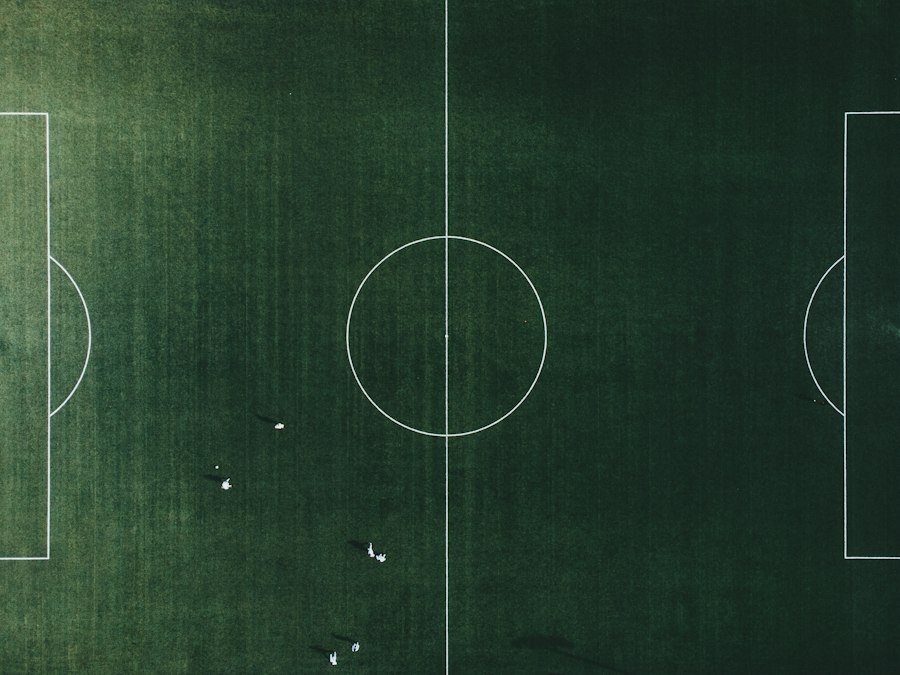
Now that we understand the roles, let’s look at how these roles are combined into popular formations. The numbers in a formation (e.g., 4-4-2) typically refer to the number of defenders, midfielders, and forwards, respectively, excluding the goalkeeper.
In addition to understanding soccer formations, it’s essential to stay updated on the latest trends and developments in the world of sports. For instance, you can explore recent changes in North American sports that could influence strategies and player performances by reading this insightful article. The piece highlights various factors affecting teams and their tactics, which can be crucial for coaches and fans alike. To learn more, check out the article on recent developments in North American sports.
The 4-4-2: The Classic Balance
This formation uses four defenders, four midfielders, and two forwards. It’s one of the most traditional and widely used setups because it offers a good balance between defense and attack.
Defensive Stability
With a flat back four, it provides solid defensive cover. The two central defenders work together, and the full-backs can push up or drop back as needed. The four midfielders form a strong shield in front of the defense, making it difficult for opponents to play through the middle.
Midfield Control and Width
The four midfielders (usually two central and two wide) allow for good control of the center of the park and provide natural width in attack. The wide midfielders can track back defensively and then burst forward to support the attack, often delivering crosses.
Attacking Options
Two strikers provide a constant threat upfront. They can play off each other, one dropping deep while the other runs in behind, or both staying high to pressure defenders. It gives options for both direct play and more intricate passing combinations in the final third.
When it Works Best
The 4-4-2 is effective when you have well-rounded players who can fulfill their roles diligently. It’s a great all-rounder for teams that want to be defensively solid while still having multiple avenues for attack. It’s also relatively easy for players to understand and execute.
The 4-3-3: Attacking Dominance
This formation consists of four defenders, three midfielders, and three forwards. It’s known for its attacking prowess and is often favored by teams that like to dominate possession and press high up the pitch.
Overwhelming Attack
The three forwards (a central striker and two wingers) create a potent attacking trident. The wingers can stretch defenses wide, cut inside to shoot, or deliver crosses, while the central striker acts as a focal point. This setup often leads to numerous scoring opportunities.
Midfield Triangle
The three midfielders typically form a triangle, often with one holding midfielder protecting the defense and two more advanced midfielders supporting the attack. This central control allows the team to dictate the tempo of the game and create passing triangles.
Defensive Vulnerabilities
One potential weakness is the lack of natural width in midfield defensively. If the wingers don’t track back, the full-backs can be exposed. The midfield three can also be outnumbered if the opposition plays with four or five in midfield.
When it Works Best
The 4-3-3 thrives when you have highly skilled attacking players, especially fast and tricky wingers. It also requires energetic midfielders who can cover a lot of ground both offensively and defensively. It’s a great formation for teams looking to play an aggressive, front-foot style of football.
The 4-2-3-1: Flexibility and Control
This formation features four defenders, two holding midfielders, three attacking midfielders (two wide, one central), and one striker. It’s extremely popular in modern football due to its tactical flexibility.
Defensive Solidity (Central)
The two holding midfielders provide a strong screen in front of the defense, offering excellent protection against central attacks. This allows the full-backs to push forward more aggressively without leaving the central defense too exposed.
Creative Hub
The three attacking midfielders provide a huge amount of creativity and goal threat. The central attacking midfielder (the ‘number 10’) is often the team’s primary playmaker, while the wide attacking midfielders can cut inside or stay wide to cross.
Lone Striker Demands
The single striker needs to be versatile. They must be able to hold up the ball, link play with the attacking midfielders, make intelligent runs, and be a clinical finisher. If the striker is isolated, the attack can become blunt.
When it Works Best
The 4-2-3-1 is ideal for teams with a strong central attacking midfielder and versatile wide players who can both create and score. It suits teams that want to control possession, overload the midfield, and launch intricate attacks through the center or wide areas. It’s adaptable enough to transition between attacking and defensive phases effectively.
The 3-5-2 (or 5-3-2): Defensive Strength with Wing-back Threat
This formation uses three central defenders, five midfielders (two of whom are wing-backs), and two forwards. It can also be seen as a 5-3-2 when defending, as the wing-backs drop deep to form a back five.
Central Defensive Might
With three central defenders, this formation provides immense defensive solidity in the middle of the pitch, making it very difficult for opponents to play through the center. It’s excellent for dealing with teams that play with two central strikers or like to cross the ball.
Wing-back Importance
The success of the 3-5-2 heavily relies on the wing-backs. They are responsible for providing all the width in both defense and attack. They need exceptional stamina to cover the entire flank, track back, and then sprint forward to deliver crosses.
Midfield Overload
The three central midfielders can dominate the middle of the park, winning possession and dictating the tempo. This allows for fluid passing and the ability to support both the defense and attack.
Attacking Pair
The two strikers can work in tandem, creating problems for opposition defenders. One might drop deeper to link play, while the other runs in behind, or they can combine to pressure the defense.
When it Works Best
The 3-5-2 is great for teams that want central defensive security and have highly athletic wing-backs. It can be particularly effective against teams that rely on traditional wingers, as the wing-backs can neutralize them, and the extra center-back deals with central threats. It also offers good attacking potency with two strikers.
Adapting Formations During a Match

It’s crucial to remember that formations aren’t rigid. A good coach will often adapt their team’s formation or tactics mid-game based on the flow of play, the opponent’s strategy, or specific situations like needing a goal or protecting a lead.
Responding to Opposition Changes
If the opponent brings on an extra striker, a coach might switch from a four-man defense to a three-man defense (by dropping a midfielder back) or vice-versa to match numbers. If the opponent is dominating the midfield, bringing on an extra central midfielder might be necessary.
Chasing a Goal
When a team is losing and needs a goal, they might switch to a more attacking formation, like pushing full-backs higher, bringing on an extra forward, or transitioning from a defensive 4-5-1 to a more aggressive 4-3-3. This often means taking more risks defensively.
Protecting a Lead
Conversely, if a team is winning and wants to protect their lead, they might become more defensive. This could involve dropping a forward for an extra midfielder or defender, forming a more compact shape, and focusing on limiting the opponent’s chances.
Player Fatigue or Injuries
Substitutions often lead to tactical adjustments. If a key winger is fatigued, a coach might bring on a more defensive-minded wide player, subtly shifting the team’s balance. An injury to a central defender might force a formation change if there isn’t a like-for-like replacement on the bench.
Beyond the Numbers: The Philosophy Behind Formations
While the numbers (4-4-2, 4-3-3, etc.) give us a starting point, they only tell a fraction of the story. The true effectiveness of a formation comes down to the coaching philosophy and how the players interpret and execute their roles within that structure.
Player Roles and Responsibilities
A 4-4-2 can be vastly different depending on whether the wide midfielders are traditional wingers who hug the touchline, or inverted wingers who cut inside. Similarly, the central midfielders might be box-to-box dynamos, deep-lying playmakers, or destructive ball-winners. The individual characteristics of the players deeply influence how a formation actually plays out on the field.
Style of Play
A team playing a 4-3-3 might focus on short, intricate passing and possession (like Barcelona under Pep Guardiola), while another 4-3-3 team might play more direct, using the wingers to stretch play and cross early. The formation itself doesn’t dictate the style; it merely provides the framework. The coach’s instructions, the players’ skills, and the team’s overall philosophy determine the style.
Flexibility and Fluidity
| Formation | Players Distribution (Defense-Midfield-Attack) | Primary Strategy | Strengths | Weaknesses | Common Usage |
|---|---|---|---|---|---|
| 4-4-2 | 4-4-2 | Balanced attack and defense | Strong defensive shape, good width, simple to execute | Can be outnumbered in midfield by formations with 3 central midfielders | Widely used in professional and amateur levels |
| 4-3-3 | 4-3-3 | Attacking with wide forwards | Strong attacking options, good width, midfield control | Requires high work rate from midfielders and fullbacks | Popular for teams focusing on possession and attack |
| 3-5-2 | 3-5-2 | Midfield dominance and wing-back support | Numerical superiority in midfield, flexible wing-backs | Vulnerable to wide attacks if wing-backs caught upfield | Used by teams wanting midfield control and counter-attacks |
| 4-2-3-1 | 4-2-3-1 | Defensive midfield shield with attacking midfielders | Strong defensive cover, creative attacking midfielders | Can be narrow if wide players don’t track back | Common in modern football for balance and flexibility |
| 5-3-2 | 5-3-2 | Defensive solidity with wing-backs | Strong defense, wing-backs provide width | Less attacking width if wing-backs are defensive | Used by teams focusing on defense and counter-attacks |
Modern football often sees players not sticking rigidly to their starting positions. Full-backs might push into midfield, midfielders might make runs into the box, and wingers might swap flanks. This fluidity makes teams harder to mark and creates unpredictable attacking patterns. Formations are becoming increasingly dynamic, shifting and adapting based on whether the team is in possession, out of possession, or transitioning between the two. The “numbers” are more of an average starting point than a fixed state.
Ultimately, understanding soccer formations is about grasping the tactical decisions coaches make to maximize their team’s strengths and exploit the opponent’s weaknesses. It’s a fascinating chess match played out on the green field, with each player a vital piece in the overall strategy.
SportsOnTV.tv Where it’s always “Game On”
FAQs
What is a soccer formation?
A soccer formation is the way in which a team positions its players on the field. It typically consists of a combination of defenders, midfielders, and forwards arranged in a specific pattern to achieve tactical objectives.
What are some common soccer formations?
Some common soccer formations include the 4-4-2, 4-3-3, 3-5-2, and 4-2-3-1. Each formation has its own strengths and weaknesses, and teams may choose a formation based on their style of play and the strengths of their players.
How do soccer formations impact gameplay?
Soccer formations impact gameplay by influencing how a team attacks, defends, and transitions between the two. The positioning of players in a formation can create numerical advantages in different areas of the field and dictate the team’s overall strategy.
What factors should be considered when choosing a soccer formation?
When choosing a soccer formation, factors such as the team’s strengths and weaknesses, the opponent’s tactics, the playing surface, and the match situation should be considered. Coaches may also adjust formations based on player injuries or suspensions.
Can a team change its formation during a match?
Yes, a team can change its formation during a match to adapt to the opponent’s tactics, exploit weaknesses, or protect a lead. These changes are often made during halftime or through substitutions to alter the team’s shape and strategy on the field.