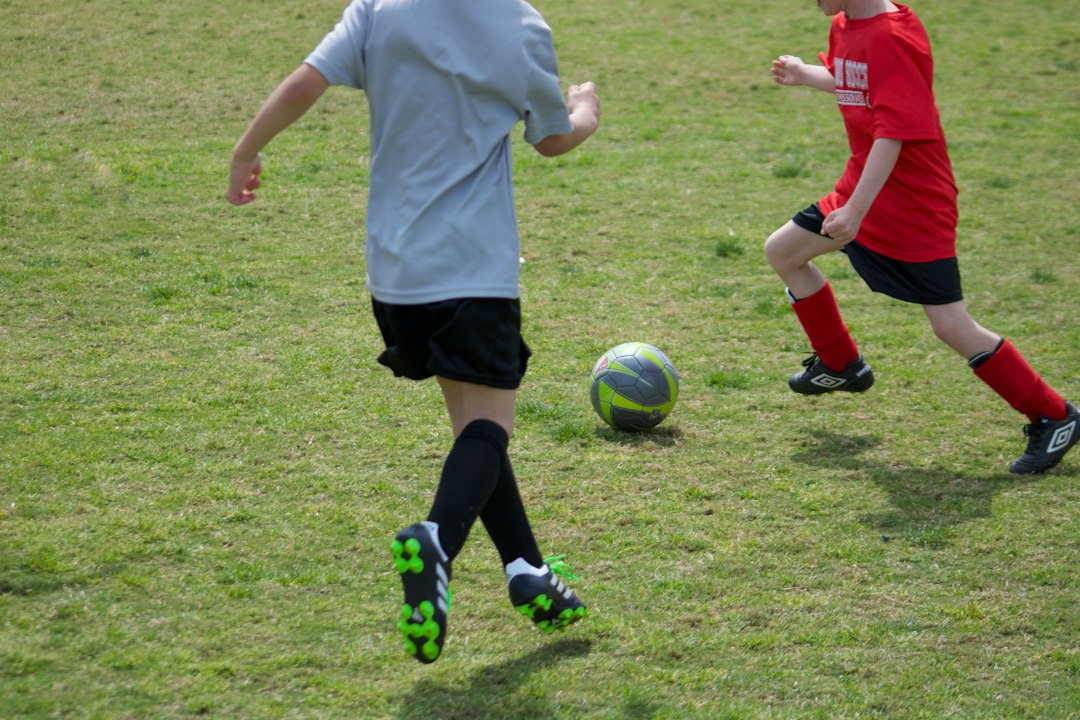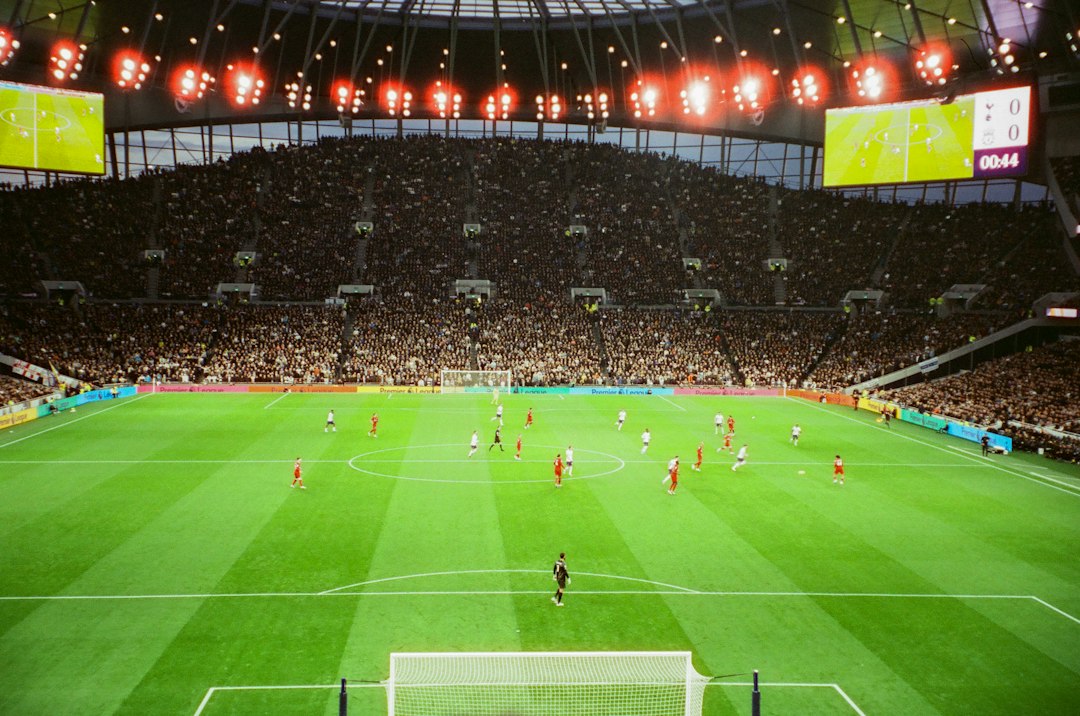


So, you’re curious about how soccer works? Great! At its core, soccer is pretty simple: two teams try to kick a ball into each other’s net. The team that scores more goals wins. But like any sport, there’s a bit more to it once you dig in. This guide will walk you through the essentials, helping you understand the flow of the game, the key players, and those head-scratching moments you often see on the pitch.
The Objective: Scoring and Winning
Let’s start with the basics. The main goal in soccer is to put the ball into your opponent’s net. This is called scoring a “goal.” Each goal counts as one point. The team with the most goals at the end of the game wins. If both teams have the same number of goals, it’s a “draw” or “tie.” In some knockout tournaments, if a game is tied after regular time, it might go to extra time and then potentially a penalty shootout to decide a winner.
For those interested in understanding the intricacies of soccer rules, a great companion article is available that highlights key moments and updates in the world of sports. You can explore the latest developments and insights by visiting this link: Asia and Global Sports: Key Highlights from the Last 24 Hours. This article provides a broader context for the rules and dynamics of soccer, making it an excellent resource for beginners looking to deepen their knowledge of the game.
The Playing Field and Equipment
Understanding where and with what the game is played sets the stage.
The Pitch: Where the Magic Happens
The soccer field, often called a “pitch,” is a rectangular grass (or artificial turf) area. Its dimensions can vary slightly, but for full-sized professional games, it’s usually between 100-130 yards long and 50-100 yards wide.
- Goal Lines: These are the lines at each end of the pitch, where the goals are located.
- Touchlines: These run along the sides of the pitch. If the ball goes over a touchline, it’s a “throw-in.”
- Penalty Area (18-yard box): This is the larger rectangular box in front of each goal. Crucial for fouls and the goalkeeper’s domain.
- Goal Area (6-yard box): The smaller box within the penalty area. Important for goal kicks.
- Center Circle & Kick-off Mark: Where the game starts and restarts after a goal.
The Ball: The Round Star
The soccer ball is spherical, made of leather or a similar material. Its size and weight are standardized for professional play to ensure fairness and consistency. You can’t use your hands (unless you’re the goalkeeper and in the penalty area!).
Player Equipment: What They Wear
Players wear a specific kit for identification and safety:
- Jersey/Shirt: With a unique number for each player.
- Shorts: Practical for movement.
- Socks: Often long, covering shin guards.
- Shin Guards: Mandatory for protection against kicks.
- Boots/Cleats: Specialized footwear for grip on the pitch.
The Players and Their Roles
A soccer team typically has 11 players on the field at a time, each with distinct responsibilities.
Goalkeeper: The Last Line of Defense
The goalkeeper is unique. They are the only player allowed to use their hands (and only within their own penalty area) to stop the ball from entering the net. Their primary job is to protect the goal. They also initiate attacks with throws or kicks.
Defenders: The Wall
Defenders primarily focus on stopping the opposing team from scoring.
- Center-backs: These are usually strong, tall players positioned in the middle of the defense. They mark opposing forwards and clear the ball from dangerous areas.
- Full-backs (or Wing-backs): These players operate on the sides of the defense. They have a dual role: defending against wingers and also pushing forward to support attacks down the flanks.
Midfielders: The Engine Room
Midfielders connect defense and attack. They are often the busiest players on the field, covering a lot of ground.
- Defensive Midfielders: Sit deeper, protecting the defense and breaking up opposing attacks.
- Central Midfielders: Control the tempo of the game, distribute passes, and contribute to both defense and attack.
- Attacking Midfielders: Play closer to the forwards, creating scoring opportunities and often taking shots themselves.
Forwards (Strikers): The Goal Scorers
Forwards are the players whose main job is to score goals.
- Strikers/Center Forwards: Play through the middle, looking for opportunities in and around the penalty area.
- Wingers: Play on the sides of the attack, using speed and dribbling to create chances and cross the ball into the box.
Game Play: How It Unfolds
Understanding the structure of the game will help you follow the action.
Kick-off: Starting the Game
A game begins with a “kick-off” from the center circle. The ball must be played forward into the opposing half. The game also restarts with a kick-off after a goal is scored.
Duration: The Length of the Match
A standard soccer match is 90 minutes long, divided into two 45-minute halves. There’s a 15-minute “half-time” break in between. At the end of each half, the referee may add “injury time” or “stoppage time” to compensate for delays during the half (e.g., injuries, substitutions, goal celebrations).
Substitutions: Bringing on Fresh Legs
Teams are allowed to make a limited number of substitutions (usually 3 to 5, depending on the competition). This allows coaches to bring on fresh players, change tactics, or replace injured players. Once a player is substituted, they cannot re-enter the game.
The Whistle: What It Means
The referee’s whistle signals various events:
- Start of the game/halves
- End of the game/halves
- A foul or infringement
- A goal scored
- The ball going out of play
For those looking to deepen their understanding of soccer, the article on European sports highlights offers a comprehensive overview of recent matches and key moments in the sport. This can be a great complement to “How Soccer Rules Work: A Complete Beginner’s Guide,” as it provides real-world examples of how the rules are applied during games. To explore the latest updates and highlights, you can check out the article here.
Fundamental Rules: Staying Within the Lines (Mostly)
Now, let’s get into the rules that govern play.
Ball In and Out of Play: Where’s the Line?
- Out of Play: The ball is “out of play” when it completely crosses a touchline or a goal line, or when the referee stops play.
- Throw-in: If the ball goes out over a touchline, the team that didn’t touch it last gets a “throw-in.” The player must throw the ball with both hands over their head, keeping both feet on the ground.
- Goal Kick: If the attacking team kicks the ball out over the defending team’s goal line, the defending team gets a “goal kick.” The ball is kicked from anywhere inside the 6-yard box.
- Corner Kick: If the defending team kicks the ball out over their own goal line, the attacking team gets a “corner kick.” The ball is kicked from the corner arc nearest to where the ball went out. This is a great scoring opportunity.
Fouls and Free Kicks: When Play Stops
Soccer is a contact sport, but there are limits. A “foul” occurs when a player commits an unfair act against an opponent.
- Direct Free Kick: Awarded for more serious fouls (e.g., tripping, pushing, holding, tackling an opponent from behind, handball – intentionally touching the ball with your hand/arm). From a direct free kick, you can score directly.
- Indirect Free Kick: Awarded for less serious offenses (e.g., dangerous play, impeding an opponent without contact, offside). You cannot score directly from an indirect free kick; the ball must touch another player before going into the goal. The referee holds one arm straight up in the air to signal an indirect free kick.
- Penalty Kick: If a direct free kick foul is committed by a defending player inside their own penalty area, a “penalty kick” is awarded. This is a direct shot on goal from 12 yards out, with only the goalkeeper to beat – a huge scoring chance.
Cards: Warnings and Send-offs
Referees use cards to manage player conduct.
- Yellow Card (Caution): Issued for less serious infractions like unsporting behavior, dissent, persistently breaking the rules, or time-wasting. Two yellow cards in one game mean a red card.
- Red Card (Dismissal): Issued for serious fouls (e.g., serious foul play, violent conduct, denying an obvious goal-scoring opportunity by foul means, or receiving a second yellow card). A player shown a red card must leave the field immediately and cannot be replaced, meaning their team plays with one fewer player for the rest of the game.
Offside: The Tricky Rule
The offside rule is often the most confusing for new viewers, but it’s designed to prevent “goal-hanging” – players just waiting by the opponent’s goal.
- Offside Position: A player is in an “offside position” if they are nearer to the opponent’s goal line than both the ball AND the second-to-last opponent (including the goalkeeper). This only applies in the opponent’s half of the field.
- Offside Offense: Being in an offside position alone isn’t a foul. A player is only penalized if, at the moment the ball is played to them by a teammate, they are in an offside position AND become “involved in active play” by:
- Interfering with play (touching the ball)
- Interfering with an opponent (blocking their view or movement)
- Gaining an advantage by being in that position.
- When there is NO Offside:
- If the player receives the ball directly from a goal kick, a throw-in, or a corner kick.
- If the player is in their own half of the field.
- If there are two opponents between them and the goal line.
- Penalty for Offside: An indirect free kick is awarded to the opposing team from where the offside offense occurred.
Think of it this way: when a teammate passes the ball, if you are closer to the opponent’s goal than almost all of their players (all but one, usually the goalkeeper), and you get involved in the play, it’s offside. The key is “at the moment the ball is played.”
Extra Time and Penalty Shootouts (for Knockout Games)
In knockout competitions (where there must be a winner), if a game is tied after 90 minutes, it typically proceeds as follows:
Extra Time: Two More Halves
Two additional 15-minute halves are played, known as “extra time” (totaling 30 minutes). If one team scores more goals during extra time, they win. If it’s still tied after extra time, the game moves to a penalty shootout.
Penalty Shootout: Deciding the Winner
A penalty shootout is not part of the game itself but a procedure to determine a winner.
- Each team selects five players to take turns shooting from the penalty spot against the opposing goalkeeper.
- The teams alternate shots.
- The team that scores more goals from their five shots wins.
- If still tied after five shots, it goes to “sudden death” – each team takes one shot at a time until one scores and the other misses.
The Referee and Assistant Referees
The officials ensure fair play and enforce the rules.
The Referee: The Boss on the Pitch
The referee is the main official, making all final decisions on fouls, goals, cards, and timekeeping. They have the ultimate authority.
Assistant Referees (Linesmen): A Pair of Extra Eyes
Two assistant referees (formerly called linesmen) help the main referee. They mainly:
- Signal when the ball has gone out of play over the touchlines or goal lines.
- Signal offside offenses.
- Help indicate fouls or other incidents the referee might have missed.
VAR (Video Assistant Referee): Modern Tech
In many professional leagues, technology called VAR is used. This system allows a small team of referees to review incidents using video replays to potentially correct “clear and obvious errors” or “serious missed incidents” related to:
- Goals (and offenses leading to them)
- Penalty incidents
- Red cards (direct, not second yellow)
- Mistaken identity (when the wrong player is carded)
It’s often a point of debate, but it aims to increase fairness in crucial moments.
Conclusion
That covers the core mechanics of soccer. While there are deeper tactics and nuances you’ll pick up as you watch more, this guide should give you a solid foundation to understand what’s happening on the field. It’s a dynamic, exciting game, and once you grasp these basics, you’ll find yourself appreciating the strategy and skill even more. Enjoy the beautiful game!
FAQs
1. What are the basic rules of soccer?
The basic rules of soccer include the offside rule, fouls and misconduct, the throw-in, goal kicks, corner kicks, and the penalty kick. These rules are essential for understanding the game and its flow.
2. How is a soccer match structured?
A soccer match is typically divided into two halves, each lasting 45 minutes, with a 15-minute halftime break. If the score is tied at the end of regular time, the match may go into extra time or a penalty shootout to determine the winner.
3. What are the rules for scoring in soccer?
A goal is scored in soccer when the entire ball crosses the goal line between the goalposts and under the crossbar. Each goal counts as one point, and the team with the most goals at the end of the match wins.
4. What are the rules regarding player positions and substitutions in soccer?
Soccer teams typically consist of 11 players, including a goalkeeper. Substitutions are allowed throughout the match, but each team is usually limited to a certain number of substitutions per game, as determined by the competition’s rules.
5. How are fouls and misconduct handled in soccer?
Fouls and misconduct in soccer can result in free kicks, penalty kicks, yellow cards (caution), and red cards (sending off). The severity of the offense determines the appropriate disciplinary action, and accumulation of yellow cards can lead to a player being ejected from the match.